
The Mistake Most People Make First
When the weather starts to turn, a lot of homeowners grab a can of WD-40, spray it on every moving part of the garage door, and call it winterized. It's an easy habit to fall into. It's cheap, it's already under the sink, and the door does sound quieter for a week or two afterward. That immediate result feels like progress.
The problem is that WD-40 is a solvent, not a long-term lubricant. It breaks up old grime, but it also strips away whatever grease was already protecting the hinges and rollers, and it evaporates fast. After a dry summer of dust and wildfire smoke settling into every track and hinge, that thin solvent film mixes with grit and actually speeds up wear instead of preventing it. By the time the first real rain hits, the parts are drier and dirtier than before you started.
Why Winter Hits Garage Doors Harder Here
Vallejo and the surrounding Solano County towns don't get brutal winters, but the shift from a long dry season into winter rain is still hard on a garage door. A few things happen at once:
- Dust turns to grime. Months of dry-season dust and smoke residue on tracks and rollers combine with the season's first rain and humidity to form a gritty paste that grinds down hardware.
- Temperature swings change spring tension. Metal springs contract slightly in cold, damp air, which can make a door that was perfectly balanced in July feel heavier or behave differently in December.
- Moisture finds every gap. Homes closer to the water in Benicia or Crockett deal with salt air year-round, which accelerates rust on hinges, tracks, and exposed hardware once winter moisture joins in.
- Older homes shift. Many houses in this area have gone through earthquake retrofit work, and foundation or frame shifts over time can throw off a garage door opening's alignment just enough that it becomes noticeable once seals need to do their job against wind-driven rain.
A Real Winter-Prep Checklist
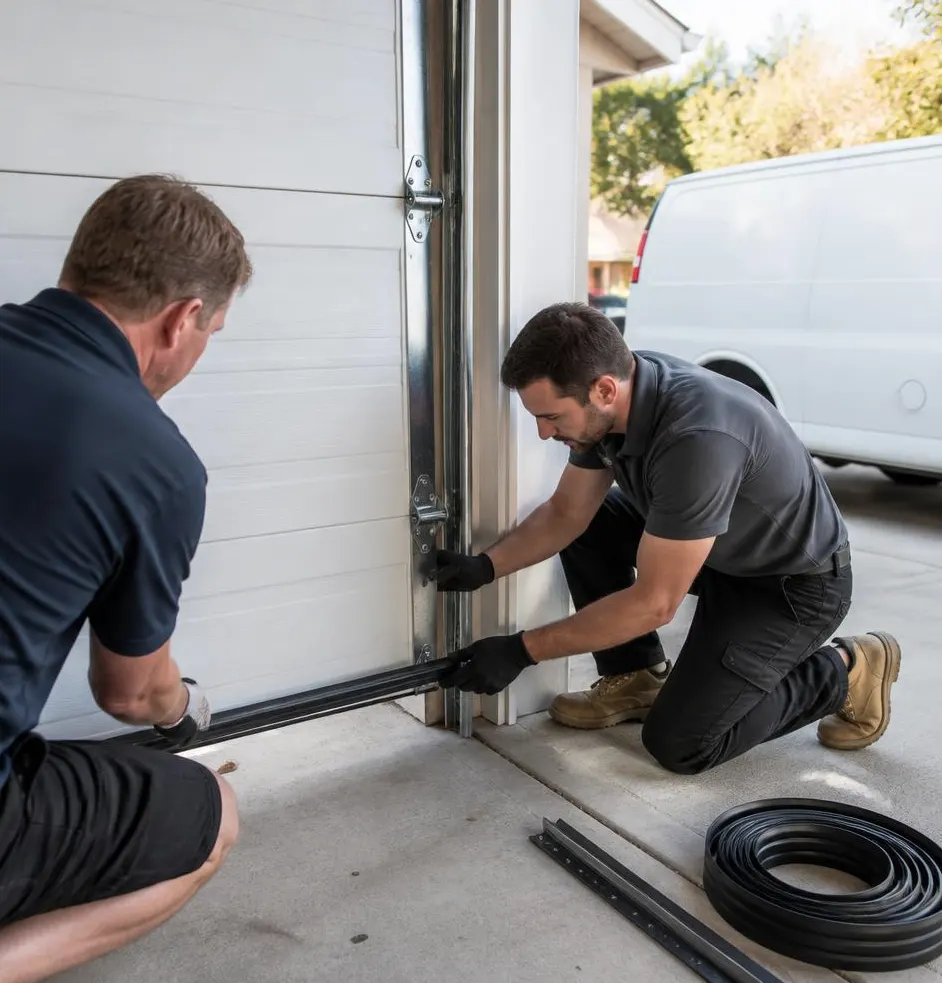
1. Inspect and Replace Weatherstripping
Check the rubber seal along the bottom and sides of the door. If it's cracked, flattened, or pulling away from the track, water and cold air will get in no matter how good the rest of the door is. This is separate from a full bottom-seal replacement project — here you're just confirming the seal is intact before the rain starts, not re-doing the whole thing.
2. Use the Right Lubricant, Not a Solvent
Skip the WD-40 as a lubricant. A silicone-based garage door lubricant is made to stay put through temperature changes and rain without washing out or gumming up with dust. Apply it to hinges, rollers, and the torsion spring itself, wiping off any excess so it doesn't attract more grit.
3. Tighten Hardware
Go down the track with a socket wrench and check every bolt and hinge screw. Summer heat and daily use loosen hardware gradually, and a door that rattles in dry weather will often bang or shift noticeably once wind and rain add extra movement.
4. Check Rollers and Tracks for Wear
Worn or cracked rollers that were tolerable in dry weather can start binding or jumping the track once moisture gets into the mechanism. Look for flat spots, cracks, or excessive play, and clean out any built-up dust before it turns into sludge.
5. Test the Auto-Reverse Sensors
Shorter, darker days and rain mean the door often gets used in lower light. Place a block of wood in the door's path and make sure it reverses properly. Clean the sensor lenses, since dust from the dry months can coat them and cause false readings or failures to engage.
6. Plan for Power Outages
Winter storms bring downed power lines along with the rain. If the opener doesn't already have a battery backup, this is the season to add one, along with confirming you know how to manually release the door if the power goes out while it's closed.
7. Watch the Spring Under Load
If the door feels heavier to lift manually, closes with more force than usual, or the opener strains and makes a new grinding sound, the spring tension has likely shifted with the temperature change. This isn't something to force through — a spring under the wrong tension is one of the more dangerous DIY mistakes homeowners make.
When to Call Vallejo Garage Door
If the door is sagging unevenly, the spring looks stretched or has a visible gap when coiled, or the opener is straining and reversing on its own, stop testing it yourself and call. Those are signs of spring tension problems, which our spring replacement service handles safely with the right tools and torque settings. For everything else on this list — lubrication, hardware, roller wear, sensor alignment — our garage door maintenance visits cover the full seasonal tune-up in one appointment, so you're not guessing at what needs attention before the rain really sets in.
If you're in Vallejo, Benicia, American Canyon, or anywhere else in Solano County and want your garage door checked before winter weather arrives, call Vallejo Garage Door today to schedule a winter maintenance visit.